

When you have a heavy load, the way you wear and carry it will be as important as the equipment itself. Properly designed load carrying equipment will help distribute the weight of your equipment evenly, keep the critical pieces of your kit within easy reach and enable you to move smoothly and effectively.
Each person has their own optimal load-carrying configuration. There is no single load-carrying solution that meets every individual’s needs. The best possible configuration for your personal load carrying equipment setup will depend on several factors, such as your job role or assignment, the type of equipment you need, the task, the duration of time you expect to be wearing the load and the frequency of access to each item of the load. Let’s get into it.
Bergens
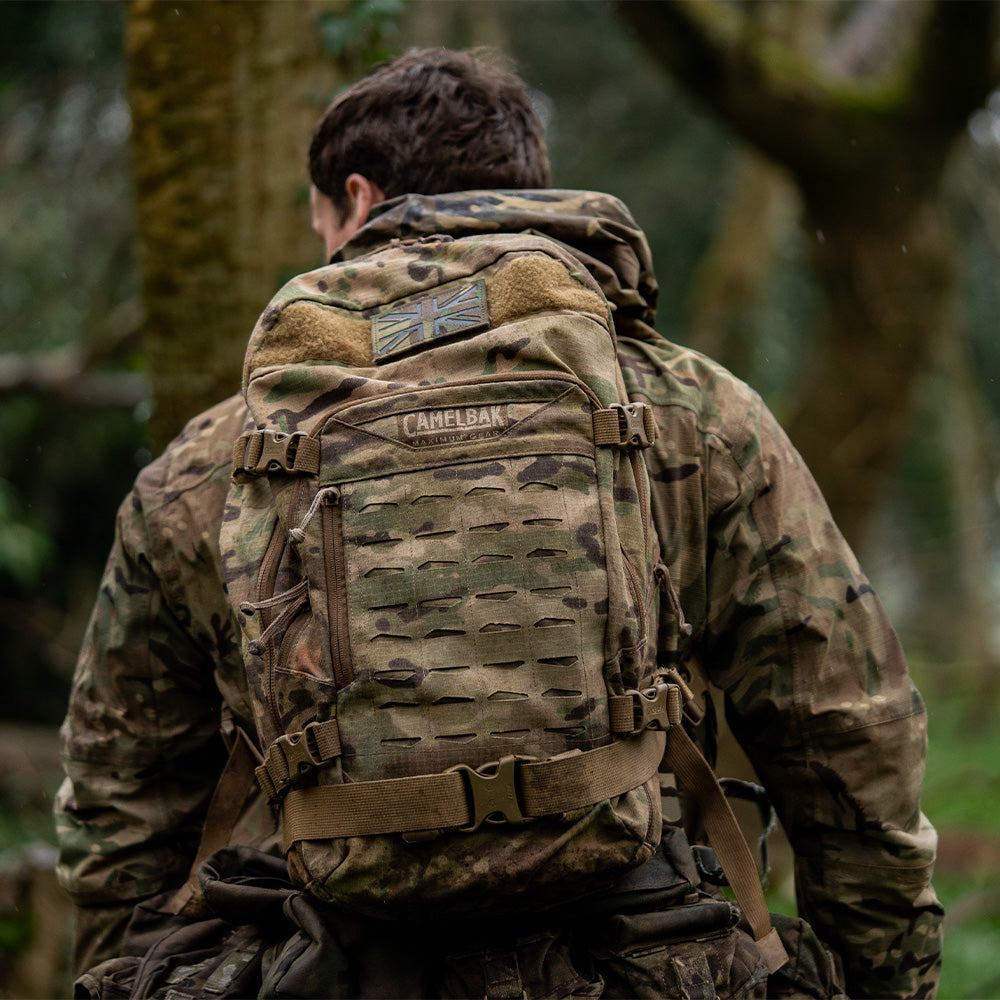
For carrying heavier loads over a long distance, a bergen is a mainstay base component of your load carrying equipment. A bergen is expected to handle large volumes of gear and therefore must provide sufficient capacity, comfort, stability and reliability for extended operations, deployments and expeditions. Consider the amount of gear you normally carry and the fit of the pack against your back. There are also many bergen accessories, covers and dry bags available to help modify your bergen to meet various operational environments.
Daysacks
A smaller bergen, known as a daysack, may serve as an alternative if you don’t need to make use of a larger bergen. Daysacks tend to be more suitable for shorter exercises, patrols, training or tasks where only a minimum amount of equipment is needed.
Webbing
Another option for distributing vital gear around the user's torso is webbing. Webbing usually consists of a belt, a yoke and numerous pouches that provide quick accessibility to the critical elements of your kit. Webbing offers great flexibility to design the arrangement of your kit and pouches based upon your individual needs.
MOLLE & Pouches
For the most customisable setup, you will want a MOLLE system. Utilising PALS attachment points, users can place compatible pouches and accessory pouches at whatever point on their belt or vest that would be most beneficial to them.
Examples of this include utility pouches, medical pouches or ammo pouches. While providing options for attaching additional pouches can be helpful, ensure you only attach those pouches that contain gear you use and place them at locations that provide efficient access.
Belts & Yokes
In many cases, it is not so much what you carry but how it is supported by the different elements of your load carrying equipment that produces the greatest benefits. Shooter's belts can act as a stable surface for carrying your critical gear. Similarly, yokes can assist in dispersing the weight of your webbing comfortably onto both shoulders. These items can be used as part of a greater overall system or independently to construct a customised load-carrying setup tailored to your needs.
Building Your Personal Load Carrying Equipment System
Your goal is to develop a load carrying system that works for you. First, determine what you need to carry. Second, consider what needs to be readily accessible. And third, choose your bergen, daysack, webbing, belts, yokes and pouches accordingly. At Task Force Military, you will find a wide variety of products in our inventory that will aid in building out, modifying, or upgrading your current system to meet your demands. You can get in touch with us today for more information.